


Cymatics Supports Language Studies
- Aug 15, 2016
- 1 min read
Canadian Professors visit the CymaScope Laboratory.
Professors Lila Pine (New Media) and Joanne DiNova (sociolinguistics) from Ryerson University, Canada, visited the CymaScope laboratory to explore the possibilities of using the instrument for language studies.
In recent years cymascopic techniques have advanced to the point where it is now possible to make almost any sound visible by transcribing sonic periodicities to water wavelet periodicities, techniques that permit even the most subtle nuances within speech, for example, to be rendered visible. The challenge facing scientists wishing to utilize cymatics to explore aspects of sound generated by organic or inorganic processes, is in developing methods capable of analyzing the resulting imagery.
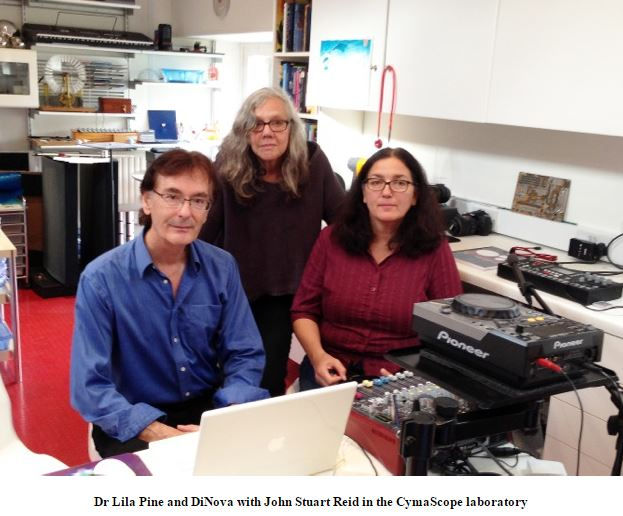
Dr Lila Pine and DiNova had previously developed a digital spectrographic instrument to compare and study patterns within languages, but they hoped that the CymaScope could provide visual markers that would help identify key patterns within different languages. They are particularly interested in the languages of First Nation people of North America in which they are beginning to identify elements not seen in the English language.
First Nation languages are at risk due to the impacts of colonization. Professor DiNova commented, '' was immediately intrigued by the Cymascope images I had seen online. But when I actually saw it in action, saw the water physically move to form complex patterns in real time, I knew right away that this was the tool for our research.'' Professor Pine added, ''And because our scholarship is Indigenous in nature, water is the perfect imaging medium."








Comments